
Hawthorne Effect

Each December, my old club would host a big taper meet. When I was 15, I remember a teammate of mine created a facebook even inviting all his non-swimmer friends to come to watch him break the 100 freestyle record.

The balls of this guy…..


In addition to his massive nuts he was also a popular guy so about twenty people came out to the meet.


JUST TO WATCH HIM SWIM THIS ONE EVENT.

Talk about pressure…

Anyways he went a best time by about half a second and broke the record.

The reason I tell this epic story is because I believe there is much to be gained from it.

Hawthorne Effect

The Hawthorne effect (also referred to as the observer effect) is a type of reactivity in which individuals modify or improve an aspect of their behavior in response to their awareness of being observed.


It was first discovered when Hawthorne Works Electric Company in Cicero Illinois ran an experiment to test whether lighting changes in the workplace would improve productivity. The result was that increasing the lighting improves the workplace productivity. However decreasing the lighting also increased productivity.  Later it was found that the improvements in productivity were independent of the lighting and were caused because the workers were being observed.


Lansdberger defined the Hawthorne effect as a short-term improvement in performance caused by observing workers.


I believe my teammate was able to utilize the Hawthorne effect to his advantage. Who knows.. maybe without the Facebook event he wouldn’t have broken the record..

How can swimmers benefit from this?

Theoretically, you could do the same thing and create a Facebook event for your next taper meet. However that seems a little excessive and the extra pressure might not be effective for everyone. I do think it could be useful in the weight room. Have team-mates watch you lift, maybe even bet money or dinner (if it’s legal) that you can complete the reps. If you can’t find anyone I find that even a camera is helpful. I record my lifts. It also has the benefit that you can watch the clip and check your form.
Asking coach for a harder practice

If you look online most weightlifting programs have a deload week every 4-8 weeks to allow the body to recuperate. However most elite-levels lifters who know their bodies much better, don’t take deload weeks in a strict schedule but instead listen to their bodies and take them when they feel it is necessary.

Let’s see how this idea can be transferred over to swimming.

To avoid overtraining, every coach will usually have 1-2 easier workouts a week to let the swimmers recover. However the coach can’t read your mind.

Imagine a day, where you for some unknown reason, feel terrific. You just woke up on the right-side of the bed and you feel like crushing it at practice today. However you show up on deck and you see that today’s practice that the coach wrote up is an easy recovery practice. What should you do??

I recommend talking to your coach and ask if he/she can write you a harder practice. Maybe you can find a few of your teammates who are motivated and also feel great to join your lane.

There are two benefits from doing this

-instead of wasting a great day, you murder a hard workout

-since you voluntarily did a hard workout, if there is a day in the future where you feel really under the weather for some reason, your coach might be more willing to give you an easier workout.

Conclusion: The next time there’s a recovery workout on a day you don’t feel you need it, SPEAK UP!

Tracking you lifts

Many fitness trainers say the one golden rule to success in the weight room is to track your lifts.

It is quite obvious that it is important to track your progress in the weight-room if you are trying to progress.

Here are three reasons why:

  • 1) By tracking your progress, you are more likely to be consistent.

If you track your lifts, you are more likely to stick to a plan.

  • 2) You are more likely going to try harder

If you’re about to hit a set of dips and you see in your log that last week you did 7 reps on that particular weight, you are going to try extra hard to make sure you get in 8 this time.

  • 3) More data is always better!

You will learn what works best for you. Furthermore, if you plateau in an exercise it will be evident in the tracking log since you can look at the progress (or lack of progress) in the log. When you plateau you know it is probably time to try something new.

Conclusion: I recommend buying a little notebook and writing down all your workouts.

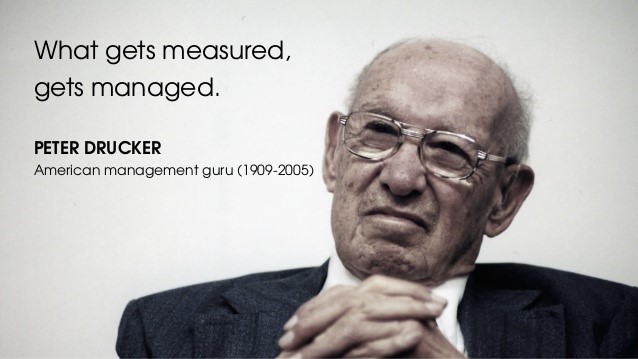
traklifts

First rule of Goal setting


Any team I have been on always has a time in the beginning of the year where the coach asks us to write down our goals for what we want to go by end of the season. We then go around one by one announcing our goals to the rest of the team.


There have been plenty of studies( Lewin(1926) Mahler(1933) Gollwitzer(1982)) that show that you are more likely to achieve your goals if you don’t announce them. The reason being you get instant gratification when announcing your goals even if you haven’t achieved them. This gratification is unjustified. Watch the TED talk below


Conclusion: Actions speak louder than words. Set your goals, keep them to yourself, work hard, and achieve them.

goalsetting1