 by
by
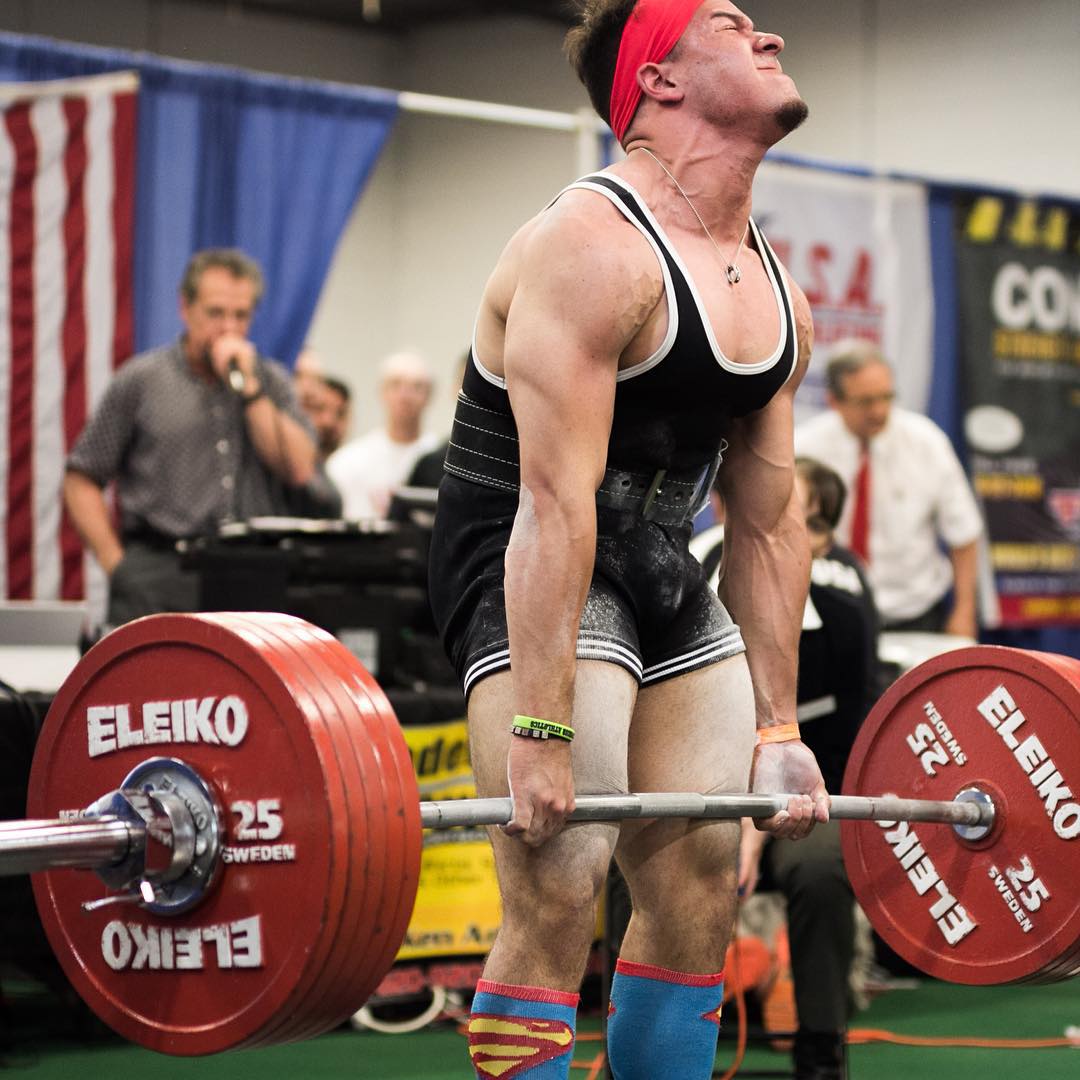
This week I had the pleasure to talk to the strongest guy I’ve ever witnessed at the MIT gym. USAPL (USA Powerlifting) Sub-junior National Champion Sean Noriega was nice enough to take an hour and a half of his time to talk to me about powerlifting. He’s an MIT sophomore and is currently studying mechanical engineering with a focus on product design.
General
Remy: How long have you been powerlifting?
Sean: I have been serious about strength training for 4.5 years, and started competitive powerlifting 2 years ago.
Remy: What got you into powerlifting?
Sean: I used to play baseball. My baseball coach back then got the team to start strength training. I really enjoyed strength training and it became my second passion. That got me into powerlifting. After juggling baseball and powerlifting for a while, I decided I wanted to be good at one thing instead of being mediocre at two. I felt I was better suited to pursue powerlifting, so now I focus solely on powerlifting.
Remy: What is the MIT powerlifting community like?
Sean: There used to be a varsity powerlifting team at MIT, but that no longer exists. Now we have a unofficial group of about 8-15 people who are serious about powerlifting.
Remy: Since there is no official team, does this mean you are coaching yourself?
Sean: I’m being coached by someone in California. We talk everyday and I send him video footage of my workouts. We have a very good relationship, I see him as both my coach and a great friend.
Remy: What are your current PRs?
Sean: My meet PRs are 353 Bench, 562 Squat. 611 deadlift.
Remy: That’s a very impressive squat. Does it translate well to other areas of fitness such as 100m dash or vertical jump?
Sean: I never timed a 100m dash , but I went a 4.6 in the 40 yard dash and I have a 37.5 inch vertical. I’ve been able to dunk (keep in mind he’s 5’8″).
Remy: How often do you practice the big 3 (Bench, Squat, Deadlift)?
Sean: My program is very high frequency. I bench about 6 times per week, squat 4-5 times a week and deadlift 3 times a week. Bench is much less taxing on the body than deadlifts and squats so I can do them more often. It seems to be paying off. I managed to increase my bench 70 lbs in the last year.
Remy: Woah a 70lbs increase for an elite lifter is insane. I’ve heard of many olympic lifters in East Asia doing high frequency, even more than once a day. Have you ever worked a big 3 more than once a day?
Sean: No I have not. Olympic lifting uses less weight and is less taxing on the body, and that’s why they can train with higher frequency. Funny enough, although we are called powerlifters we actually focus more on strength. Olympic lifters train more power.
Remy: There must be some similarities though, can powerlifters become good olympic lifters or vice versa?
Sean: Olympic lifting requires more technical coordination and less raw strength. It is actually quite different from powerlifting so I don’t think there are many people that do both. However I think Olympic lifters would be able to put up some competitive numbers in the squat since both their movements ( ‘snatch’ and ‘clean and jerk’) involve coming up from a squat position.
Nutrition
Remy: Do you take anything before a workout?
Sean: Either a coffee, monster drink or a pre-workout. Essentially anything high in caffeine.
Remy: Do you take any supplements?
Sean: Just Creatine. I used to take fish oil and multivitamins regularly but I do not notice a big difference from them. I try to get my nutrients from real food. It is much better to get your nutrients from natural sources of food and it is absorbed much better that way. If my joints really ache then I will take fish oil.
Remy: Do you have a nutrition/diet plan?
Sean: I have been tracking my food/calories for the last 4 years. I use apps such as MyFitnessPal to track them. I consume 3260 calories per day. My macros are 185 g protein, 400 g carbs, 100 g fat. Other than that I have a pretty flexible diet. (he was eating a donut during the interview).
Remy: Have you ever tried intermittent fasting?
Sean: Yes, once in a while I do it. For people with a big appetite like myself it is a great tool. I don’t like to snack and I find it a lot more enjoyable to eat big meals, and IF allows me to do that.
Remy: Do you take protein shakes?
Sean: I have protein powder, but I don’t take it regularly. I just take them to help me hit my macros (of 185 grams) on days where I didn’t eat enough protein.
Training
Remy: Can you give me an example of what you do for bench day?
Sean: Today’s set is as follows.
6 sets x 5 reps regular bench RPE 8
5 sets x 5 reps close-grip bench RPE 8
Most powerlifters train with weight with using the % system, which is % of their 1RM. However since I have a very intense program, I use the RPE scale. RPE 10 means you lifted right to point of failure and RPE 9 means you have 1 rep left in the tank and RPE 8 means you have 2 reps left in the tank. Using this system allows me to train even with varying levels of fatigue.
Remy: How much rest between sets?
Sean: Mike Tuchscherer , a well-respected coach and athlete in the powerlifting community has a well-known table that has the recommended and optima rest periods for an exercise for a given RPE. For a RPE 9 it is usually 5 minutes and RPE 8 about 4 minutes. However it also depends on how taxing the exercise is in general. Deadlifts usually require more rest than Bench for a given RPE.
Remy: Do you do much accessory work?
Sean: The more accessory work I do, the less time and energy I have on the big 3. Therefore, I don’t do too much accessory work. However my back is a lagging in strength so I do extra accessory work for that.
Remy: Do you do hypertrophy specific workouts?
Sean: Yes since strength and muscle size are related, we do hypertrophy work as well. Most people have the misconception that powerlifters only work in the short rep ranges but that’s not true. During the early season we do more volume in the 8-10 rep range and what we do is not too different to bodybuilders.
Remy: Do you do cardio?
Sean: I think cardio is important as your heart needs to be strong to pump blood. I did baseball before so I have a good cardiovascular base. However, I try to incorporate cardio during the off-season, but I don’t have any strict cardio program.
Remy: The big 3 all work the core well, do you do any direct core work?
Sean: I think leg-lifts and planks are good core exercises, but again I do not have a strict program.
Remy: Do you do any sort of stretching or mobility work?
Sean: There used to be a time where I did up to one hour of mobility work a day but now I am at a point where I am happy with my mobility. Too much mobility can actually hinder your performance in powerlifting. The goal is to be as mobile as possible where you can comfortably perform the full ROM but without being too mobile that you reduce stability.
Remy: What about foam rolling? I notice many of the powerlifters do a lot of foam rolling. Can you tell me more about it?
Sean: I foam roll prior to lifting to break down scar tissue and the fascia which is on top of the muscles. Foam rolling also increases blood flow to the muscles prior to lifts.
Remy: Do you ever deload?
Sean: Deload usually happens after a meet. I reduce the intensity and volume anywhere from 3 days to 2 weeks, but still can make sure to go to the gym to maintain my strength and mobility.
Miscellaneous
Remy: Do you have a pre-meet ritual? Do you use menthol paste or smelling salts (a.k.a. ammonia inhalants)?
Sean: I generally create a music playlist for a meet. Powerlifters also use smelling salts right before their lifts at meets. I use them before the squat and deadlift but not the bench.
Remy: I wonder if smelling salts will help swimmers in a short race. Your thoughts?
Sean: I doubt it since it only helps for a few seconds. However I don’t know enough to give a definitive answer.
Remy: What do you think most people do wrong at the gym?
Sean: Most gym-goers practice exercises with bad form and with more weight than they are capable of and without completing the full ROM. For example they do half-squats with their knees caving in. This not only increases the chances of injury but they are practicing the incorrect movement pattern.
Many are also too obsessed with doing the correct rep range. People always ask me what rep range is best and the truth is It is important to train in all rep ranges and there is no right or wrong rep range.
Remy: How important is sleep to you?
Sean: Sleep is crucial. I would not be able to do the intense program I am on, unless I sleep enough. At MIT it is the norm to not sleep much, but I make sure to get my 8 hours of sleep each night.
Remy: What are your powerlifting goals?
Sean: I have very big goals. I plan on winning the IPF World Championships.
Conclusion:
As you know I’m a firm believer that there is a lack of communication between disciplines and that the swimming community can learn so much from other sports. Powerlifting and swimming have many similarities. They both involve perfecting a specific movement pattern. Swimmings has the big 5 (free, back, breast , fly and UDK) and powerlifting has the big 3 (bench, squat, deadlift).
It was a great experience talking to Sean. He is very driven. You can sense his inner fire and it was motivating just to be around him. I learned a lot from this interview and I hope you readers have as well.
You can follow Sean on his instagram @noriegapowerlifting or his twitter @seannoriega.