Concentric Only Training for Athletes

Read More

It’s quite clear that strength training (assuming the exercises are similar to the movement patterns to your sport) is helpful. Nathan Adrian claims to be able to do 4 reps of pull ups with an extra 60kg attached. Michael Phelps claims to be able to do 30 pull ups (which is even more impressive at his weight). However, the one problem with traditional strength training is that it involves both a concentric and eccentric portion, unlike most sports that only involves the concentric portion.

For a bodybuilder, eccentrics are amazing, as it increases muscle mass. However, for most sports, our goal in the weight room is not to add muscle mass, but to maximize our strength-to-weight ratio. If we can gain the strength(improve CNS efficiency) via the concentric and minimize the mass gain from the eccentrics perhaps this would be ideal.

Another benefit of concentric only training is improved recovery time and less soreness. As great as strength training can be, it should be supplemental and we don’t want it to affect their main training. COT would allow the athlete to train their sport more often and at a more optimal and less fatigued state. This may also be why Olympic lifters (whose movements are generally more concentric only) are known to train with much higher frequency than most powerlifters.


What Do The Studies Say?

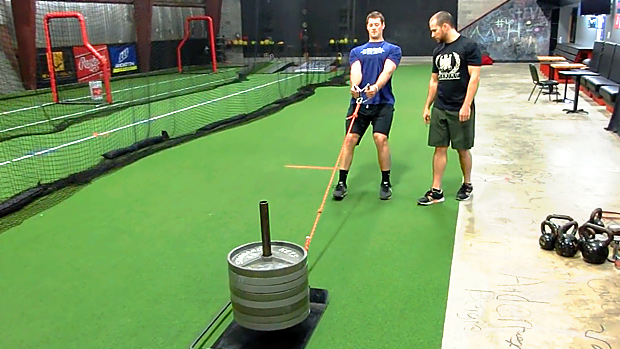
  1. West et al concluded that a reverse sled pull training session (a concentric-only exercise) may provide an effective training stimulus whilst causing minimal stress to recovery mechanisms. Athletes in the study performed 5 sets of 2 x 20m sled pulls with a sled loaded with 75% of their body mass. The session induced significant elevations in testosterone, cortisol and lactate, indicative of a strong metabolic and hormonal stimulus.  Despite creating this stimulus the training session did not induce significant muscle damage (determined creatine kinase levels) and only acutely impaired neuromuscular function. Specifically, jump performance was reduced at 1 hour post-session but was recovered at 3 hours post-session. ‘Traditional’ resistance training sessions may be expected to impair neuromuscular function for around 2 days.
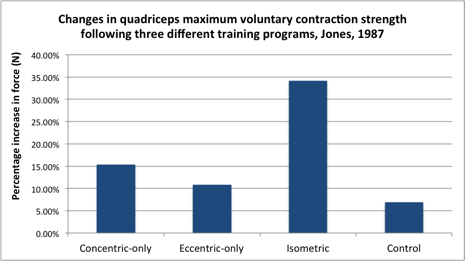
  2. Here is another promising study that shows that concentric training is not only enough to gain strength gains, but it even better than eccentrics. Looking at the chart below, perhaps including isometrics to the concentrics could be beneficial.
 

Exercises:

Here are several examples of COT exercises. Let me know if you find more!

Tire Flipping

Sled pulls

Sled pushes

Slides

Lunges (up stairs)

Movement training (watch Ido portal)

Pull ups/Dips where you let go at top. (pull-ups shown below)

If you are someone who has slower recovery I would definitely recommend playing around with this idea!

SportyFi: A Decentralized Sports Investment & Funding Ecosystem

Read More

Living in North America, where competitive sports are taken very seriously, I am surrounded by many people in my life that are currently devoting or have devoted countless hours to a sport. Out of the hundreds of athletes I know, a several have gone off to become World-class athletes competing in the Olympic Trials or even going to the Olympics. However, even for the world-class athletes they usually have a hard time balancing work or school with their sport.


In the sport of swimming, it is custom for a swimmer to train approximately 10 workouts a week each session ranging about 2.5 hours. This adds up to about 25 hours of pool time. When you include the extra time that is needed for eating 5-6 meals a day, and sleeping an extra hour or two to recover, it is easy to say that swimming is a full-time job. In fact, I would say its more than a full-time job as even outside of the time spent swimming there are sacrifices to be made. For example, many athletes do not drink any alcohol during the swim season and watch their diet to ensure they only eat healthy foods.


This would be acceptable if they were compensated for their efforts. However, compensation by the government is only about 1000-1300 USD a month for Canadian swimmers. I personally know Olympians who work at gas stations to make due. For other sports such as Brazilian Jiu-Jitsu or Powerlifting that are privatized and don’t have organizations, there is no compensation at all. It’s unfortunate since these athletes can perform better if they could focus solely on their sports. It’s a Catch-22 because they need to train full-time to perform better and earn more through sponsorships, but need funds to train full-time in the first place.


A few weeks ago, I stumbled across a project named SportyFi, based in the U.K to solve this problem. Founded by the former members of Onlinegym4me.com, they plan to release a platform in January to allow athletes to raise funds by crowdfunding, in return for a fraction of their income that may come from future sponsorships. The platform will also have an option to raise funds as a donation where the athlete can have their fans raise funds in exchange for a thank-you letter or an autograph.


The project will utilize smart contracts, a contract using the blockchain technology, to help athletes raise money.  The blockchain is decentralized and therefore is more secure and can’t be hacked or manipulated by a third party.  This will also increase efficiency and reduce costs to ensure that the athletes will receive more funds. Sportyfi will only take 5% of the raised funds unlike other crowdfunding projects like Kickstarter. The blockchain also ensures full transparency to the investors and athletes.The alpha version of the SportyFi platform is currently undergoing internal testing. They plan to have a beta ready at the end of this year, with the platform launching to the public in Q1 2018.


Starting in Q2 of 2018, they “will allocate a part of the funds raised to a special SportyFi Professional Fund. The fund will invest in those athletes with the greatest potential in exchange for future return, based on, for example, prize money, image rights, transfer fees, and other rights of an athlete, depending on the type of sport. A team of sports industry advisors and professionals with a proven track record will analyze and select those athletes with the greatest potential to invest in, facilitating growth of the fund and the whole SportyFi ecosystem”.


Their project has backing by respected members in both the blockchain and sports industry. On the blockchain side, they have Charlie Shrem who was the founder of BitInstant and Bitcoin Foundation. On the sports side they have Ricardo Carlos, and Ronaldinho Gaúcho, both legendary soccer players and winners of the FIFA World cup.


They are currently running their Initial Coin Offering until December 10th to raise funds. If you are a blockchain enthusiast like myself, you may be interested in investing. If you are an athlete that wants to raise funds, their platform will be out shortly so be sure to sign up for their email list to stay updated!


Terry Laughlin, founder of Total Immersion Swimming passes away

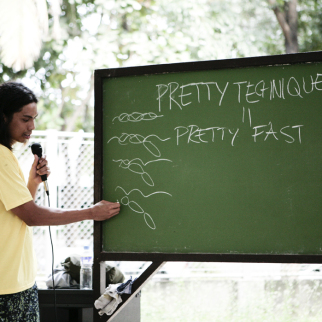
Terry passed away from cancer complications on 10/201/2017, at only 66 years old. He was a large inspiration in my take of how to tackle swimming. He focused on the concepts of mastering technique and efficiency instead of focusing on improving fitness/VO2max. He viewed swimming as an art form, training with short repetitions(to prevent fatigue) of proper technique rather than with poor technique in a fatigued state.

My favorite video (below) of his ideas, is the presentation he gave at MIT where I studied. Unfortunately, this was the summer before I enrolled and I was not able to be there.

He has influenced many people, most notably Tim Ferris founder of the 4-Hour-Workweek.

I was lucky enough to meet his daughter once at a YMCA pool in NewYork while she was teaching a workshop. I hope his teachings will continue to be passed down through his daughter and other instructors.

To learn more about his teachings, please visit totalimmersion.net

Product Review: “FINIS HydroHip” for body rotation

When I was in elementary school , the swim team I was on had a very talented swimmer who had all the records for the men’s 15-18 age group. Everyone looked up to him and he eventually went to the Athens Olympics in 2004 and Beijing Olympics in 2008.

miguel has great rotation

Watching him swim, I noticed that even though he was only about 5’7” (170 cm),  when he swam in his races he looked much bigger than everyone else. For the most part, this seems to be the case for good swimmers. Faster swimmers always appeared bigger than they actually are when they swim. Why is this? The answer is rotation. They had bigger strokes because they utilize rotation to maximize the length of their stroke. Watching him swim taught me the importance of body rotation.

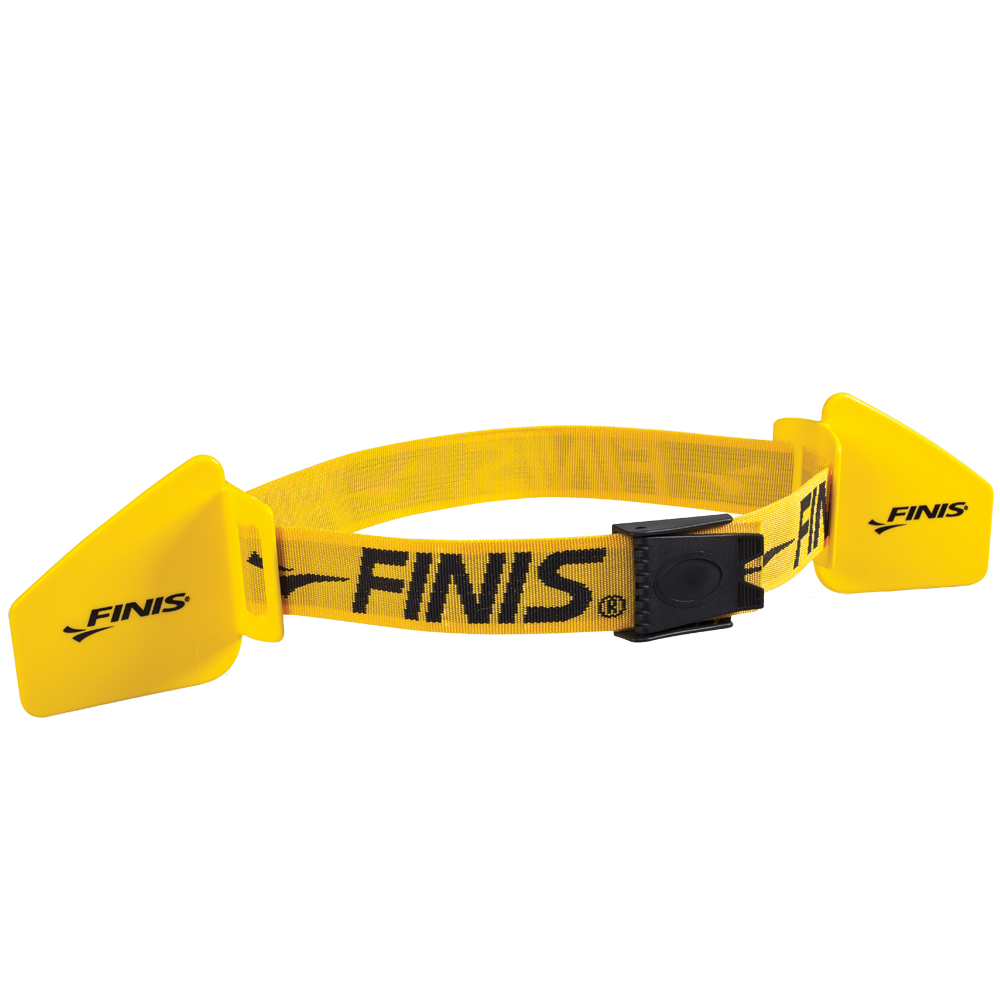
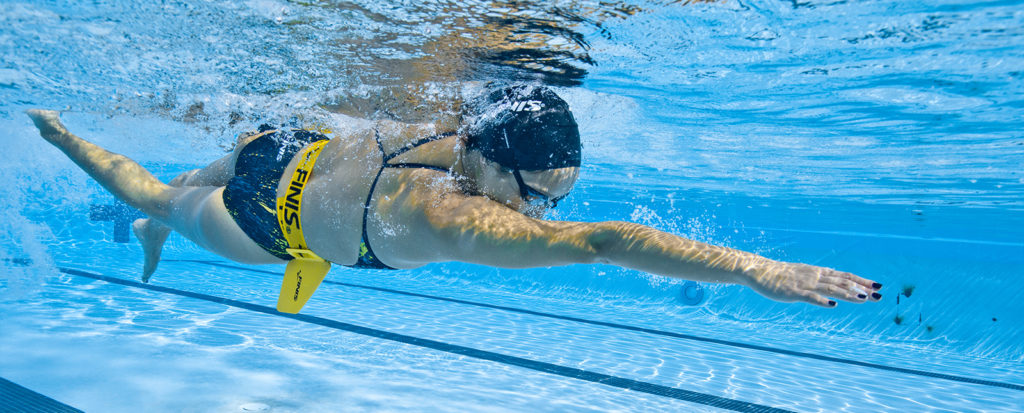
Last year I purchased the product “HydroHip” from FINIS that helps with body rotation. It is a belt that wraps around your waist and adds two fins to create resistance when you rotate your body. This teaches you to swim while driving with your hips and also strengthens your transversal abdominal muscles.

Swimming with these do not slow you down too much and can easily be used in practice such as during warm-up or the set right before or after the main set. I also think they can be used for drills such as the one-arm freestyle/backstroke in addition to the kicking drill where your arms are places by your sides.hydrohip I was afraid that the belt would not be comfortable due to the plastic fins. I feared the fins would poke me during each stroke. Surprisingly the belt is quite comfortable and I did not have any discomfort whatsoever with the fins. The belt strap is made of nylon and is one-size-fits-all and can quickly be adjusted.

I usually suck my stomach in and tighten it similar to a weightlifting belt so that it is nice and tight. This way when I rotate the belt does not wiggle around and cause chafing.

In conclusion, I highly recommend this product and believe it can help immensely for freestyle and backstroke.

swimmer wearing hydrohip

Want to learn how to maintain strength, endurance mobility and prevent weight gain during a vacation? Grab a free e-book  where I offer the short bodyweight workouts and nutrition plan that I use that still allows do this without sacrificing your relaxing vacation.

Why you shouldn’t always learn from the best

A good teacher must know the rules; a good pupil, the exceptions.”
—MARTIN H. FISCHER, PHYSICIAN AND AUTHOR

Tim Ferris, author of the four-hour workweek talks about the importance of  learning not from the best , but from someone in the top 5% with exceptional circumstances. He mentions that instead of learning how to swim from Michael Phelps who broke a world record at 15, people should learn from Shinji Takeuchi who didn’t even start swimming until 37.

The two reasons for this are as follows:

  1. The top 1% often succeed despite how they train, not because of it. Superior genetics, or a luxurious full-time schedule, make up for a lot.
  2. Career specialists can’t externalize what they’ve internalized. Second nature is hard to teach.


Today, I will be applying the same concept to mobility training/flexibility. Instead of studying a contortionist or a tiny female gymnast, I will study a 240 lb. body-builder who can shoulder press 135lbs for reps while doing the splits. His name is Jon Call aka Jujimufu, here is his Instagram https://www.instagram.com/jujimufu/?hl=en.

jujimufu is not the best at the splits, but still impressive

After digging into numerous dark corners of the internet, I managed to find his sketchy website where he has a mobility tutorial. Link is below. He is a goofy individual, but do not mistake him for a fool.

http://trickstutorials.com/index.php?page=content/flx3

Want to learn how to maintain strength, endurance mobility and prevent weight gain during a vacation? Grab a free e-book  where I offer the short bodyweight workouts and nutrition plan that I use that still allows do this without sacrificing your relaxing vacation.


A video of Butterfly-related Exercises

Here is a video of a few of the many exercises I perform out of the pool, that I believe can help improve your speed power and mobility in the butterfly.


The exercises I have performed are as follows:

0:03 – shoulder dislocates

0:06 – hanging swings

0:14 – Weighted muscle ups

0:20 – Front lever pull overs

0:28 – Weighted pull ups

0:40 – stranding ab roll-outs

0:49 – pull overs

0:54 – knee jumps

1:01 – bridge push ups


Want to learn how to maintain strength, endurance mobility and prevent weight gain during a vacation? Grab a free e-book  where I offer the short bodyweight workouts and nutrition plan that I use that still allows do this without sacrificing your relaxing vacation.

Swimbuddy platform wins $10,000 at the Dream It. Code It. Win It. Competition!

A few months ago , I created a platform called “Swimbuddy” that allows two swimmers to race each other remotely.

http://swimnology.com/2016/04/09/swimbuddy-a-remote-swimming-platform/

I submitted this project to a competition organized by Dream it. Win it. Code it. Dream it. Code it. Win it. is a 501(c)(3) non-profit organization launched by Cristina Dolan, the MIT Club of New York, the MIT Enterprise Forum of New York City, and TradingScreen to celebrate and reward computer science education amongst high school students, college students, and young women.

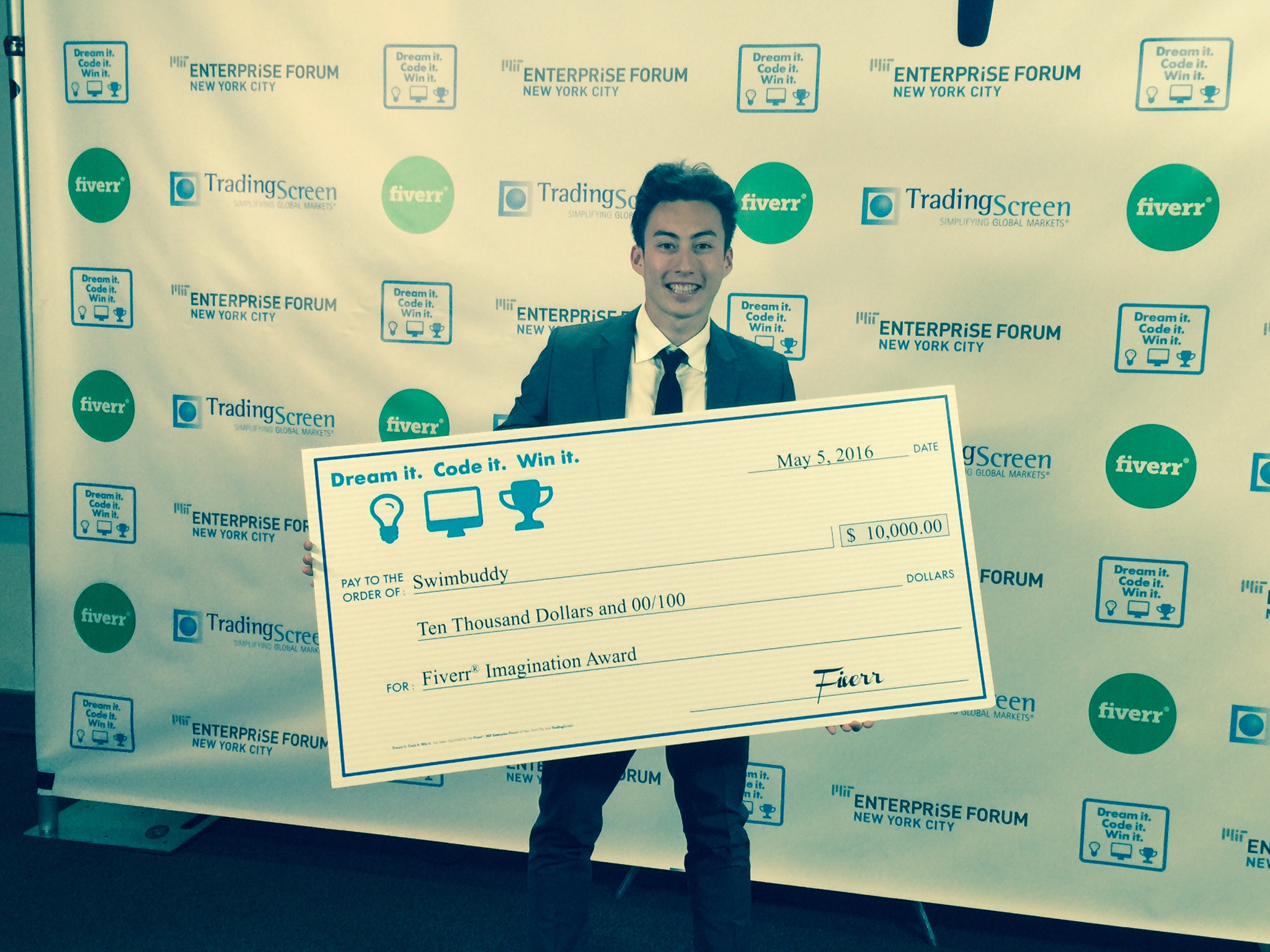
I am happy to say that Swimbuddy won the Fiverr Imagination award!

Swimbuddy wins a big cheque


When I was awarded on stage, the MC asked me if I raced Michael Phelps with the swim buddy.

After the award ceremony, I had a lot of people come up to me. It was great to hear so many people telling me how much they liked Swimbuddy. Even one of my competitors told me that my project stood out and was their favorite. A few people, asked me if I was going to make this into a start-up or get it working for the Olympics.


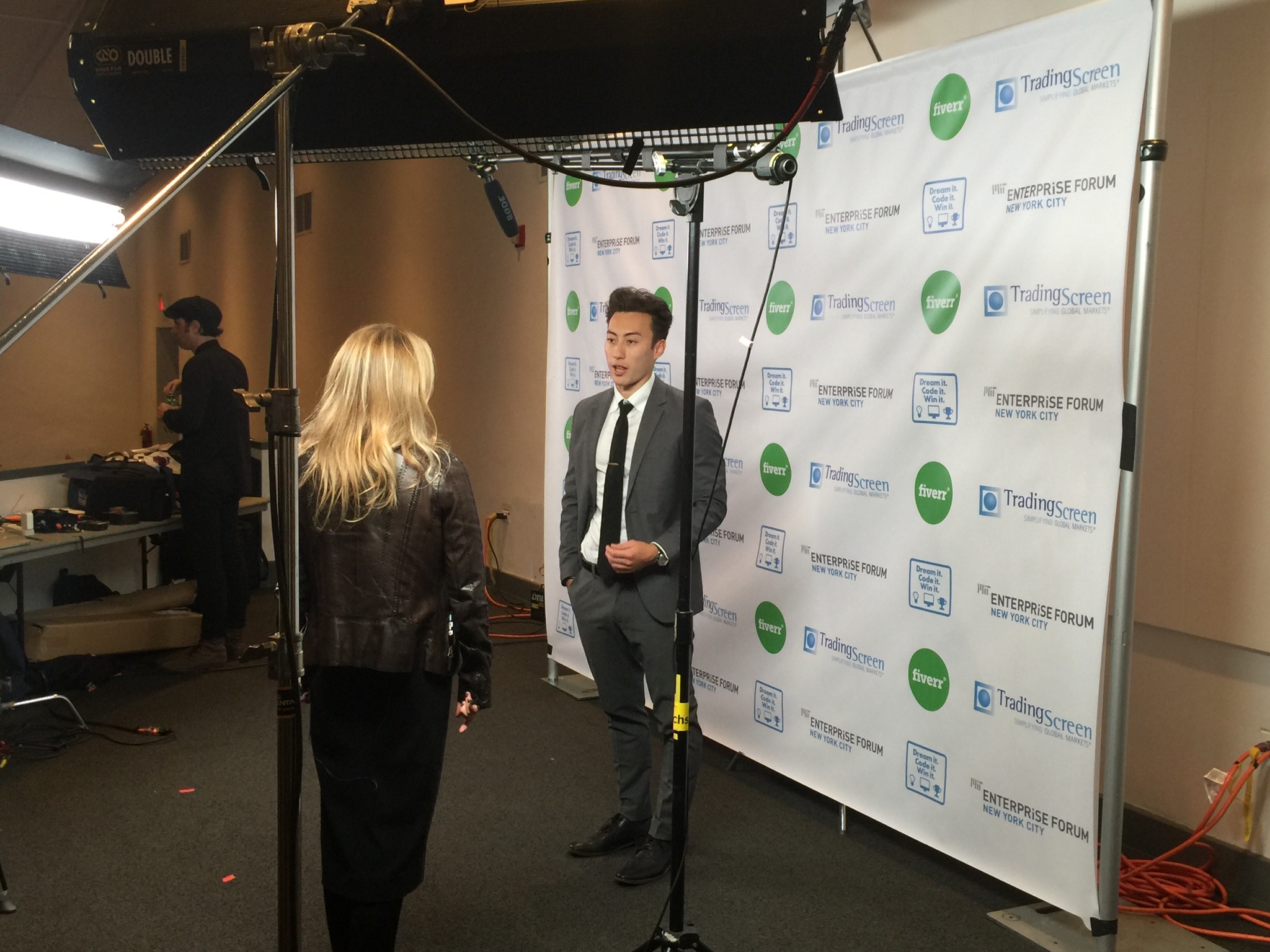
getting interviewed for Swimbuddy


Want to learn how to maintain strength, endurance mobility and prevent weight gain during a vacation? Grab a free e-book  where I offer the short bodyweight workouts and nutrition plan that I use that still allows do this without sacrificing your relaxing vacation.

Ido Portal: The study of Movement

Recently, I’ve come across Ido Portal, a visionary from Israel. Ido started off with Afro-Brazilian Capoeira, but eventually started practicing “Movement” and is now the pioneer of the “Movement” culture.

What is “Movement”?

“Movement is big. Bigger than any specific movement discipline and it contains within it HUGE ‘worlds’ like the world of fitness, dance, martial arts, strength, flexibility, circus and more. Specializing is great – but beyond our specialties – we are all HUMAN first, MOVERS second and only then SPECIALISTS.” – Ido Portal

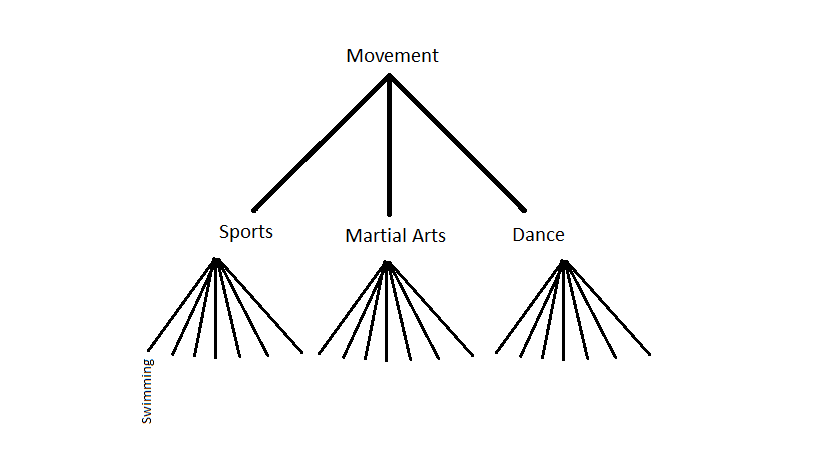
A tree diagram showing the many types of Movement; Ido portalMovement venn diagram

A movement pattern involves combinations of concentric, eccentric, and  isometric contractions in some range of motion. We are all movers. Whether it be Rowing, Running, Basketball, Swimming, Hip-hop, or Brazilian Jiu Jitsu, we are all practicing on becoming the best ( whether that be the most powerful , the most efficient, the most controlled , the most graceful) at a specific movement pattern. Ido believes that it is important to get your head out of the gutter and to look around because there is so much you can learn about your discipline from studying others movers.


At first glance of this video you may find his practices to be strange but this man is a genius! You will also be surprised how hard some of these movements are. The movement he performs at 0:35 is called the lizard crawl. Try it for yourself.

I have a lot of respect for this individual and have been incorporating many of his practices in my training regiment. Be sure to watch his videos on Youtube since he provides a lot of good ideas.

Swimbuddy – A remote swimming platform

Over the past few weeks, I decided to make a platform called “Swimbuddy” that allows to swimmers in different parts of the world to train and race each other.

The motivation for this project came from:

My little sister who is a swimmer specializing in open-water and often ends up training close to 20km per day alone since no one else is crazy enough to do it

When I was younger my school, would participate in virtual swim meets where two teams would compete against each other by racing in their own respective pools and comparing their times online later.

Below is my demo video


The project was composed of two parts:

  1. using computer vision to track the swimmer
  2. using a micro-controller to display the tracked swimmer’s location  at the other pool.


RGB LED strip Display

My first plan was to use a laser which I would rotate with a servo motor to show the location of the swimmer.  The laser would be placed in the middle of the pool and rotate. I did not like the idea of trying to find and follow a single dot the entire time, so I decided to try a laser line. However in a laser line the light gets dispersed too much that it is not visible after a few meters. At first I was just trying with a 5mW laser so I tried it with a 100mW laser and it was still too weak. Another problem with the laser is that mapping the swimmer location to the laser’s angle would have to be adjusted for each pool depending on the depth. For pools that vary in depth from one side to the other, this is even more of headache.

Due to these reasons above, I switched to LED strips. Although LEDs are something you need to place on the bottom of the pool, it usually only takes me about 5minutes. I bought 4 LED strips off of amazon, each one being 5 meters for a total of 20 meters. The LED strips cost $30/5meters and have a IP67 rating so they are waterproof to up to 1 meter, However I think going up to 2 or 3 meters should be fine as well.

Smartphone Swimmer Tracking

I created a  smartphone app that tracks the swimmers head by looking for pixels in the lane that are close in the RGB scale as the RGB of the swimmer’s head.  Once I gather these pixels, I average them (after removing the outliers). Due to the flickering properties of water, tracking lighter colors is a bit more challenging than on land. However darker colors, can be tracked quite well so as long as the swimmer has dark color hair or is wearing a dark cap the tracking works.

Swimbuddy logo

Combining the two

When starting the app on the smartphone, I enter the IP address of the laptop I want to send the data to. Once I have the location of the swimmer on the smartphone, I send the data over a web socket to my laptop. My laptop is connected to an Arduino micro-controller which I use to power and control the LED strips. Another great part about the LED strip is that unlike the laser and servo, the strip doesn’t require an external power source.


Want to learn how to maintain strength, endurance mobility and prevent weight gain during a vacation? Grab a free e-book  where I offer the short bodyweight workouts and nutrition plan that I use that still allows do this without sacrificing your relaxing vacation.

What Swimmers can learn from French Rock Climbers

Back in the 1990’s, the French were outperforming everyone in rockclimbing. Their secret? The french were training their pulling strength with isometric contractions. An exercise now called the “Frenchie”.

A frenchie is a series of pull-ups which incorporates isometric lock offs in the range of motion.

One repetition of a frenchie is shown below.

  1. Start Hanging
  2. Pull Up fully to the highest position and lock off at the full lock position
  3. Lower down to  a dead hang
  4. Pull Up and lower down to lock off at a 90 degree arm position
  5. Lower down to a dead hang
  6. Pull Up and lower down to lock off at a 120 degree arm position
  7. Lower down to dead hang
  8. Repeat


This is the standard frenchie, however there are many variations of incorporating isometric contractions into your training. The video below shows incredibly strong calisthenics athletes incorporating isometrics in a different way.


Isometric contractions are great because they offer higher muscle fiber recruitment. A recent study comparing the level of muscle activation during isometric, concentric, and eccentric muscle actions found that a person can recruit over 5% more motor-units/muscle fibers during a maximal isometric muscle action than during either a maximal eccentric (lowering) or maximal concentric (lifting) action; that’s 95.2% for isometric compared to 88.3% for the eccentric and 89.7% for the concentric. [Babault et al. 2001.]


Nathan Adrian is know to be able to perform 4-5 reps of pull-ups with an additional 132 lbs on him. Michael Phelps can do 30 consecutive bodyweight pull-ups (which is quite incredible given his height and weight).  It is quite evident that pull-ups translate well to swimming.


force velocity curve showing force for concentric isometric and eccentric movements


Isometrics are a great way to break plateaus. As evident in the force-velocity curve below when you perform an isometric exercise you will be able to pull or push more weight than during a dynamic exercise.

Personally when I was stuck at a 1RM (one rep max) of 125lbs for pull-ups, I incorporated this trick into my training regiment by performing isometrics with 125-140lbs. When doing weight over my 1RM (supra maximal training), I would use a box to to get my chin over the bar and just work the isometric and eccentric portion. I was able to break 140lbs in a matter of weeks.

Although dynamic training should always be the bread and butter of your strength training program, the isometrics are a great supplement!