A swim meet recorded in 360 VR

Virtual Reality has been around since the 1950s, but due to the lagging technology back then , it died out. However, Virtual Reality is increasing in popularity again as the technology is finally there to support it.


I recorded the NEWMACS Swimming and Diving Championships with the Ricoh Theta S show below. It is the best in the market for consumers at less than 300$ and is extremely user-friendly. It uses two wide-lens fisheye cameras and stitches the two images together automatically. The resolution is not as good as the professional method of attaching 12 go pros to a mount and stitching them together. However the gopro method costs thousands of dollars and the software to stitch the images is also expensive and takes hours of blood sweat and tears to do. Furthermore the stitching with the gopro is never perfect and you will notice them in the VR.

ricoh theta S camera that was used to record the 360 Virtual Reality swim meet

Here is the link for some of the photos I took:

https://theta360.com/users/67447?utf8=%E2%9C%93&select=image

and the video is below

The one problem with the Ricoh Theta S is that although the resolution is good when taking still pictures, it is lowered when recording a video. The resolution for video is technically 1080p, but because of the much much larger FOV it is not nearly as crisp. However, many companies such as Samsung, Nikon, and Sphericam are releasing their 360 cameras that can record 4k quality in the spring (of 2016)!

If you purchase a VR headset such as the google Cardboard, you can watch this video in VR! There is no doubt in my mind that in a decade or so everyone will be watching all sporting events this way. Parents will no longer have to pay for expensive tickets and hotels to watch their kids swim and will be able to do so in the comforts of their own home, while still feeling present at the meet.

Interview with Powerlifter Sean Noriega


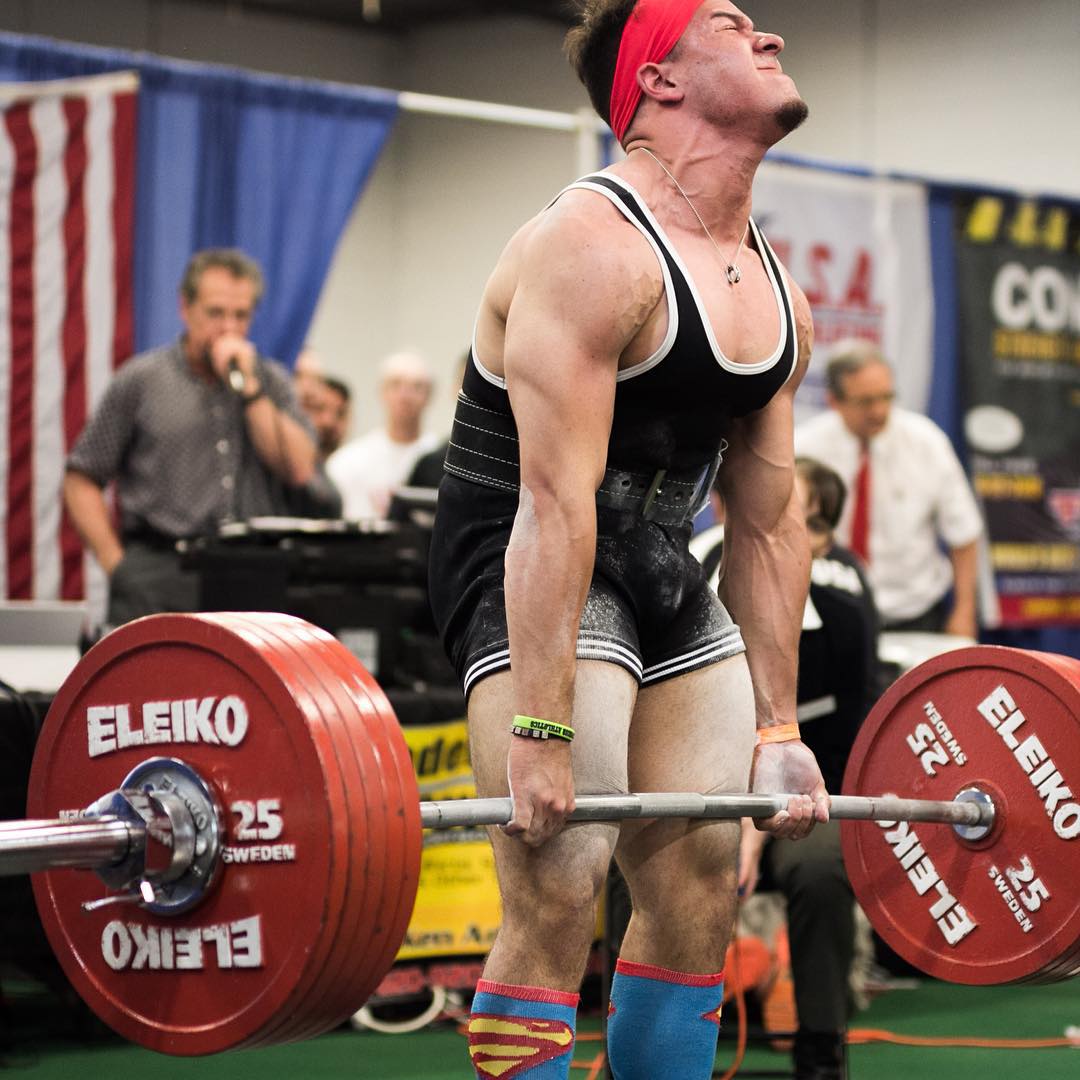
This week I had the pleasure to talk to the strongest guy I’ve ever witnessed at the MIT gym. USAPL (USA Powerlifting) Sub-junior National Champion Sean Noriega was nice enough to take an hour and a half of his time to talk to me about powerlifting. He’s an MIT sophomore and is currently studying mechanical engineering with a focus on product design.
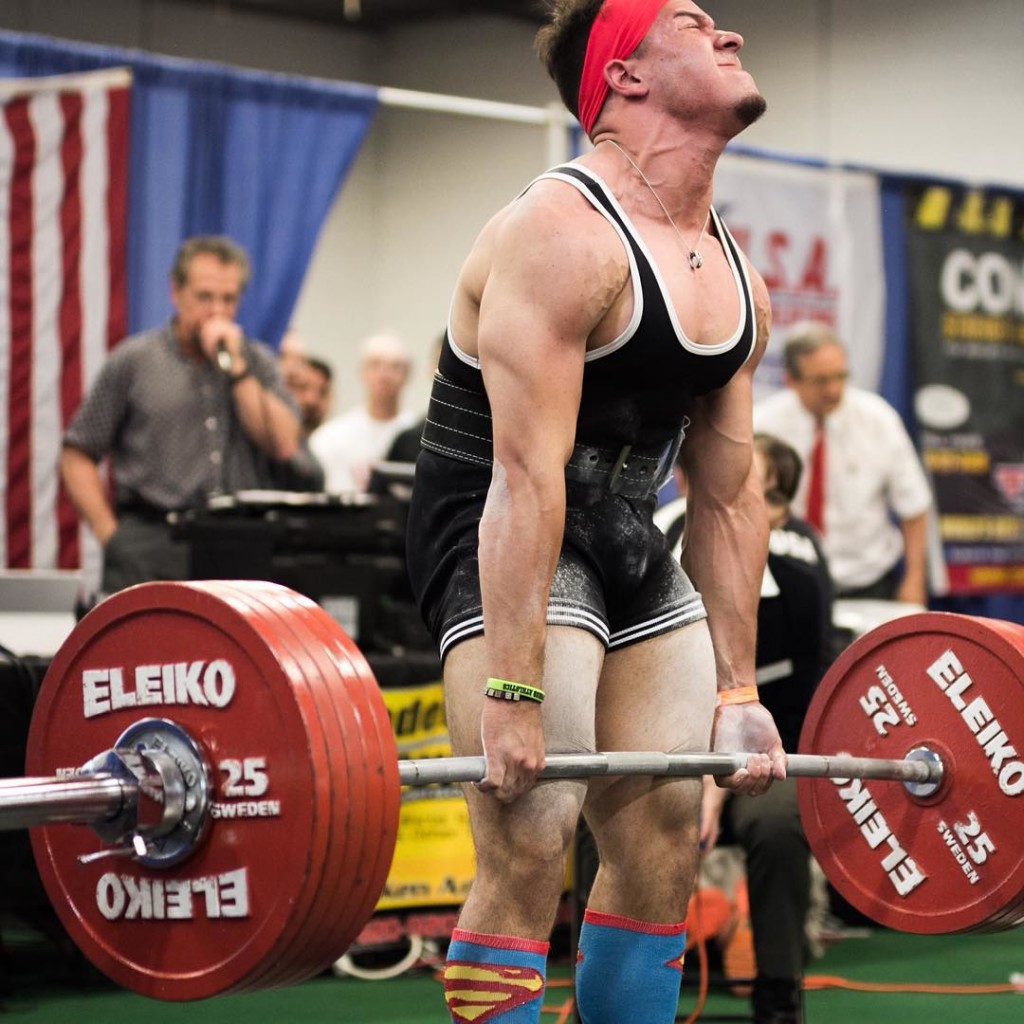
Interviewee Sean noriega deadlift in a powerlifting competition
General

Remy: How long have you been powerlifting?

Sean: I have been serious about strength training for 4.5 years, and started competitive powerlifting 2 years ago.

Remy: What got you into powerlifting?

Sean: I used to play baseball. My baseball coach back then got the team to start strength training. I really enjoyed strength training and it became my second passion. That got me into powerlifting. After juggling baseball and powerlifting for a while, I decided I wanted to be good at one thing instead of being mediocre at two. I felt I was better suited to pursue powerlifting, so now I focus solely on powerlifting.

Remy: What is the MIT powerlifting community like?

Sean: There used to be a varsity powerlifting team at MIT, but that no longer exists. Now we have a unofficial group of about 8-15 people who are serious about powerlifting.

Remy: Since there is no official team, does this mean you are coaching yourself?

Sean: I’m being coached by someone in California. We talk everyday and I send him video footage of my workouts. We have a very good relationship, I see him as both my coach and a great friend.

Remy: What are your current PRs?

Sean: My meet PRs are 353 Bench, 562 Squat. 611 deadlift.

Remy: That’s a very impressive squat. Does it translate well to other areas of fitness such as 100m dash or vertical jump?

Sean: I never timed a 100m dash , but I went a 4.6 in the 40 yard dash and I have a 37.5 inch vertical. I’ve been able to dunk (keep in mind he’s 5’8″).

Remy: How often do you practice the big 3 (Bench, Squat, Deadlift)?

Sean: My program is very high frequency. I bench about 6 times per week, squat 4-5 times a week and deadlift 3 times a week. Bench is much less taxing on the body than deadlifts and squats so I can do them more often. It seems to be paying off. I managed to increase my bench 70 lbs in the last year.

Remy: Woah a 70lbs increase for an elite lifter is insane.  I’ve heard of many olympic lifters in East Asia doing high frequency, even more than once a day. Have you ever worked a big 3 more than once a day?

Sean: No I have not. Olympic lifting uses less weight and is less taxing on the body, and that’s why they can train with higher frequency. Funny enough, although we are called powerlifters we actually focus more on strength. Olympic lifters train more power.

Remy: There must be some similarities though, can powerlifters become good olympic lifters or vice versa?

Sean: Olympic lifting requires more technical coordination and less raw strength. It is actually quite different  from powerlifting so I don’t think there are many people that do both. However I think Olympic lifters would be able to put up some competitive numbers in the squat since both their movements ( ‘snatch’ and ‘clean and jerk’) involve coming up from a squat position.

Nutrition

Remy: Do you take anything before a workout?

Sean: Either a coffee, monster drink or a pre-workout. Essentially anything high in caffeine.

Remy: Do you take any supplements?

Sean: Just Creatine. I used to take fish oil and multivitamins regularly but I do not notice a big difference from them. I try to get my nutrients from real food. It is much better to get your nutrients from natural sources of food and it is absorbed much better that way. If my joints really ache then I will take fish oil.

Remy: Do you have a nutrition/diet plan?

Sean: I have been tracking my food/calories for the last 4 years. I use apps such as MyFitnessPal to track them. I consume 3260 calories per day. My macros are 185 g protein, 400 g carbs, 100 g fat. Other than that I have a pretty flexible diet. (he was eating a donut during the interview).

Remy: Have you ever tried intermittent fasting?

Sean: Yes, once in a while I do it. For people with a big appetite like myself it is a great tool. I don’t like to snack and I find it a lot more enjoyable to eat big meals, and IF allows me to do that.

Remy: Do you take protein shakes?

Sean: I have protein powder, but I don’t take it regularly. I just take them to help me hit my macros (of 185 grams) on days where I didn’t eat enough protein.

Training

Remy: Can you give me an example of what you do for bench day?

Sean: Today’s set is as follows.

6 sets x 5 reps regular bench RPE 8

5 sets x 5 reps close-grip bench RPE 8

Most powerlifters train with weight with using the % system, which is % of their 1RM. However since I have a very intense program, I use the RPE scale. RPE 10 means you lifted right to point of failure and RPE 9 means you have 1 rep left in the tank and RPE 8 means you have 2 reps left in the tank. Using this system allows me to train even with varying levels of fatigue.

Remy: How much rest between sets?

Sean: Mike Tuchscherer , a well-respected coach and athlete in the powerlifting community has a well-known table that has the recommended and optima rest periods for an exercise for a given RPE. For a RPE 9 it is usually 5 minutes and RPE 8 about 4 minutes. However it also depends on how taxing the exercise is in general. Deadlifts usually require more rest than Bench for a given RPE.

Remy: Do you do much accessory work?

Sean: The more accessory work I do, the less time and energy I have on the big 3. Therefore, I don’t do too much accessory work. However my back is a lagging in strength so I do extra accessory work for that.

Remy: Do you do hypertrophy specific workouts?

Sean: Yes since strength and muscle size are related, we do hypertrophy work as well. Most people have the misconception that powerlifters only work in the short rep ranges but that’s not true. During the early season we do more volume in the 8-10 rep range and what we do is not too different to bodybuilders.

Remy: Do you do cardio?

Sean: I think cardio is important as your heart needs to be strong to pump blood. I did baseball before so I have a good cardiovascular base. However, I try to incorporate cardio during the off-season, but I don’t have any strict cardio program.

Remy: The big 3 all work the core well, do you do any direct core work?

Sean: I think leg-lifts and planks are good core exercises, but again I do not have a strict program.

Remy: Do you do any sort of stretching or mobility work?

Sean: There used to be a time where I did up to one hour of mobility work a day but now I am at a point where I am happy with my mobility. Too much mobility can actually hinder your performance in powerlifting. The goal is to be as mobile as possible where you can comfortably perform the full ROM but without being too mobile that you reduce stability.

Remy: What about foam rolling? I notice many of the powerlifters do a lot of foam rolling. Can you tell me more about it?

Sean: I foam roll prior to lifting to break down scar tissue and the fascia which is on top of the muscles. Foam rolling also increases blood flow to the muscles prior to lifts.

Remy: Do you ever deload?

Sean: Deload usually happens after a meet. I reduce the intensity and volume anywhere from 3 days to 2 weeks, but still can make sure to go to the gym to maintain my strength and mobility.

Miscellaneous

Remy: Do you have a pre-meet ritual? Do you use menthol paste or smelling salts (a.k.a. ammonia inhalants)?

Sean: I generally create a music playlist for a meet. Powerlifters also use smelling salts right before their lifts at meets. I use them before the squat and deadlift but not the bench.

Remy: I wonder if smelling salts will help swimmers in a short race. Your thoughts?

Sean: I doubt it since it only helps for a few seconds. However I don’t know enough to give a definitive answer.

Remy: What do you think most people do wrong at the gym?

Sean: Most gym-goers practice exercises with bad form and with more weight than they are capable of and without completing the full ROM.  For example they do half-squats with their knees caving in. This not only increases the chances of injury but they are practicing the incorrect movement pattern.

Many are also too obsessed with doing the correct rep range. People always ask me what rep range is best and the truth is It is important to train in all rep ranges and there is no right or wrong rep range.

Remy: How important is sleep to you?

Sean: Sleep is crucial. I would not be able to do the intense program I am on, unless I sleep enough. At MIT it is the norm to not sleep much, but I make sure to get my 8 hours of sleep each night.

Remy: What are your powerlifting goals?

Sean: I have very big goals. I plan on winning the IPF World Championships.

Conclusion:

 As you know I’m a firm believer that there is a lack of communication between disciplines and that the swimming community can learn so much from other sports. Powerlifting and swimming have many similarities. They both involve perfecting a specific movement pattern. Swimmings has the big 5 (free, back, breast , fly and UDK) and powerlifting has the big 3 (bench, squat, deadlift).

It was a great experience talking to Sean. He is very driven. You can sense his inner fire and it was motivating just to be around him. I learned a lot from this interview and I hope you readers have as well.

You can follow Sean on his instagram @noriegapowerlifting or his twitter @seannoriega.
 

Simulated Annealing on Technique

Warning: This post is an extremely mathematical one.

I often think of technique as an optimization problem. There are hundreds of different parameters varying from body position to breathing pattern and the goal is to find a combination of these parameters that maximizes our efficiency. When solving an optimization problem it is important to try your best to avoid a local maximum and instead try to find the global maximum. Simulated Annealing is one approach to this.

This is the best analogy I have for Simulated Annealing.

Imagine being on a large mountain range (with many hills), and you are trying to find the highest peak. However it is very foggy and you can only see one step ahead in every direction. The simple strategy to finding the peak is to just keep taking the neighboring step that takes you higher until there is none left. However the problem is that you may get stuck on what is called a local maximum. It is a peak but not the highest peak. Simulated Annealing deals with this by occasionally taking steps that takes you to a lower spot (in hopes that you will reach an even higher peak later). How often does it take a lower step? Simulated Annealing uses a measure called temperature to determine this. The higher the temperature the more likely it is to take a step that goes lower.

The temperature changed as the optimization goes on. In most Simulated Annealing algorithms, the temperature starts very high and slowly decreases as time goes on. This is called a Cooling Schedule.

Technique optimization using simulated annealing

Optimizing technique in swimming or any discipline involving repetitive movement patterns should be viewed the same way. Start the season with a higher temperature and slowly decrease it as you get closer to championship meet.

So I encourage everyone to increase the temperature and make a jump down once in a while.  The worst that can happen is you find out the new “hill of technique” you are on is not as optimal as the previous one. In that case you can always revert back to the old technique or try another hill.


The Ankle Flexibility of a Ballerina

Ankle flexibility and strength is an important part of swimming, yet it is often over-looked. I rarely see swimmers stretching their ankles. Increased ankle flexibility and strength will do wonder to your kicking propulsion and do ten times more good to your kick than improving your squat.

Out of all the disciplines out there, Ballet dancers are at the top of the game when it comes to ankle flexibility and strength. Pictures speak a 1000 words, so below is a picture in which a ballet dancer supports the whole body on the tip of a fully extended foot. This technique is called the “Pointe”. It is usually done with “pointe shoes” and requires tremendous ankle strength and flexibility.

pointe done by a ballerina demonstrating ankle flexibility strength and mobility

Although its not necessary for swimmers to be able to do the pointe, there are many aspects of the pointe and training done to achieve the pointe that can be beneficial for swimmers. I found two instructional videos on Youtube to be informative. The first one focuses more on the ankles, and it was interesting to hear that Ballerinas utilize a form of PNF stretching as well. At the 1:30 mark she calls it “resistance stretching” but it is essentially the same.

The second video focuses more on toe flexibility, which I have never seen anyone in the swimming world talk about. However I think it can also be very advantageous to have flexible toes. Furthermore, there is no easier way to separate yourself from the crowd than by focusing on something no one else is!


Gymnastic Rings : The Original TRX

When practicing for the one arm chin-up (OAC) , I purchased a pair of gymnastic rings to prevent elbow strain from practicing on the bar. However, I tried various other exercises on the rings such as the dip. Although I can do dips on the bar with 120lbs attached to me, on the rings I was barely able to do them with just my bodyweight. Furthermore, I was shaking immensely when doing them, meaning that a lot of my energy was going into stabilization. This was a humbling experience but also a very important one. It taught me that my stabilizers were weak since I was only practicing dips on the bars. Since swimming is done in an unstable environment (unlike land sports where the athlete is grounded), I believe stabilization work is vital.  It is important to practice many exercises such as the rows, front-lever pull downs and dips on the rings.

“Everything new is a well-forgotten old” – Russian proverb

Although the TRX is good and is used by many swimming programs to work the stabilizers I believe the TRX is just a big marketing scam. It is just a copy of the original gymnastic rings. Furthermore, the TRX costs over $200 compared to the rings that cost less then $20 (because people are silly enough to pay $200 for nylon straps). Lastly, the TRX doesn’t allow for movements such as muscle-ups, dips and rows. You can do pretty much all the TRX exercises using the rings, but you can’t do all the rings exercises on the TRX.

rings


Conclusion: Invest $20 on a pair of gymnastic rings to work on your reactive stability.

Happy Festivus! #OAC #onearmchinup #festivus #fitness #kinobody #calisthenics

A video posted by Remy Mock (@remymock) on


Pull ups and Dips for Swimmers

After college, I started to incorporate weighted dips into my strength training routine. I found it to be an amazing exercise. It works the chest, shoulder, and triceps as well as shoulder flexibility. Furthermore, since it is a closed-chain movement (ie. hands are fixed in space and do not move), it is much safer. I have never injured myself doing this exercise. I can’t say the same for the bench press.

After discovering the benefits of dips, I was a little agitated that they were not part of the weight training program I was on in college. This made me start to question the other exercises that were performed in the college strength training routine. We were performing various isolation exercises such as skull crushers and triceps extensions. Should we really be doing the same isolation work that body-builders do? Furthermore, isolation movements (especially triceps ones) are extremely unnatural. In comparison, think about how often we use closed-chain compound movements.

Every time you get in and out of your seat, you are performing a squat, and every time you drop your keys and need to pick it up, you are performing a dead-lift. When you jump out of the pool, you are doing a pull up followed by a dip. Have you ever had to do a movement  similar to skull-crushers in everyday life? Most likely not. Unnatural movements, more often than not, can lead to injuries.

I am drifting off topic, so let me get to my main argument. My theory is that pull-ups and dips should be the main focus for swimmers in the strength training. The two exercises work the first and second half of the stroke respectively. Luckily enough, I was able to find a study that was able to test my hypothesis.

dips

Study:

Scientists at Ball State University in the United States divided 10 highly trained male collegiate swimmers into two groups. Members of both groups maintained a daily swimming volume of about 5600 metres, with most of the work consisting of intervals designed to produce an exercise intensity of greater than 85% V02max (over 90 per cent of maximal heart rate).

Strength training was conducted twice a week for six weeks, but the two groups used different resistance-training techniques. One group utilized a weight-assisted dip and pull-up training device. This first group completed three sets of dips and pull-ups per workout, with as many repetitions as it took to reach complete fatigue during each set.

The second group carried out traditional weight-training routines, with lat pull-downs, elbow extensions, elbow flexions, bent-arm flys, quadriceps extensions, and hamstring flexions serving as mainstays of the program. All swimmers performed three sets of each exercise with eight to 12 reps per set, using increasing resistance over time.

In the study, the six weeks of swimming and strength training were followed by six weeks of swimming-only workouts.

Results:

Over the 12-week period, there were no differences between the two groups in lean body mass or per cent body fat. However, the weight-assisted dip and pull-up swimmers fared slightly better, compared to the traditional strength trainers. For one thing, they improved their 22.9 meter front crawl sprint time by .3 seconds, from 11.2 to 10.9 seconds, while the traditional people failed to improve.

Their conclusion:

“Weight-assisted dips and pull-ups may be more like typical swimming motions, compared to routine strength-training routines, and therefore might be better at improving actual swim-stroke power.”

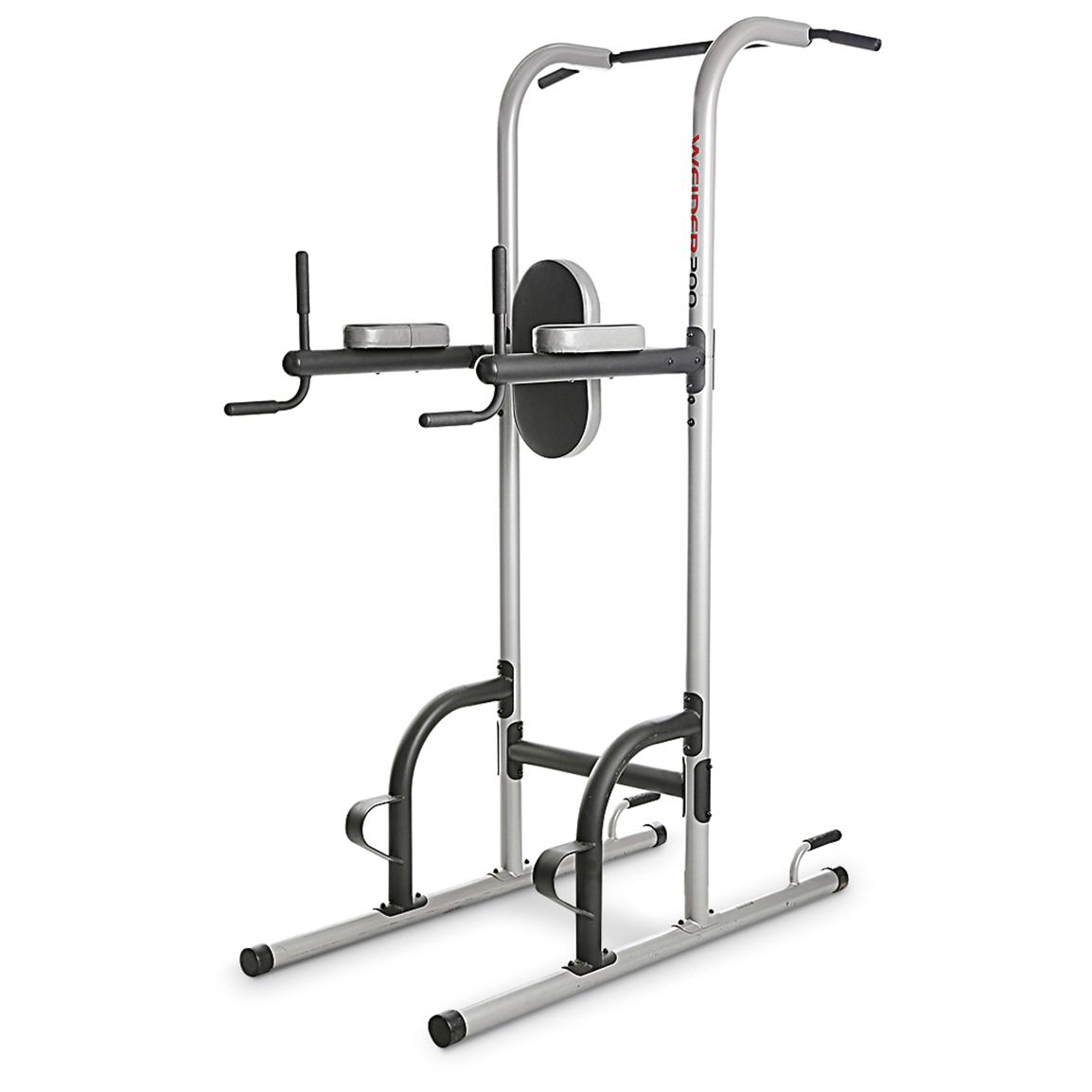
powertower

My Conclusion:

The results of this study seem to be in line with my theory that pull-ups and dips should be the main focus in the weight room for swimmers. However this is just one study and it is important to keep an open-mind.

The great thing about pull-ups and dips are that they do not require expensive equipment. You can purchase a power tower (shown below) for just under $100, and have it on the pool deck. You can also buy an over-the-door pull-up bar for $20 and buy a pair of gymnastic rings for an additional $20 to perform dips. Dips can also be performed on the pool ladder.

Ladder or Dip Station?

Smart Goggles for Swimming

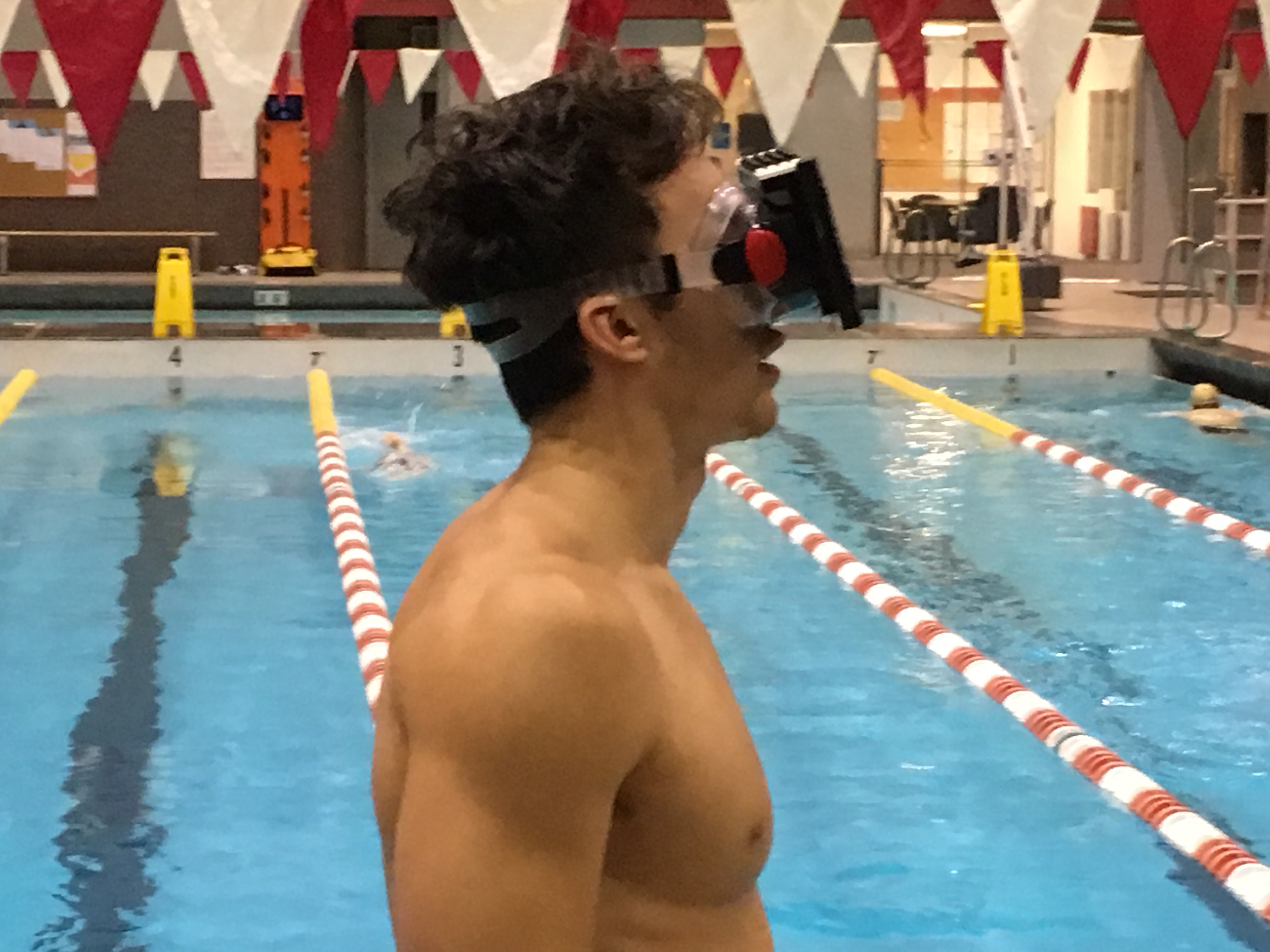
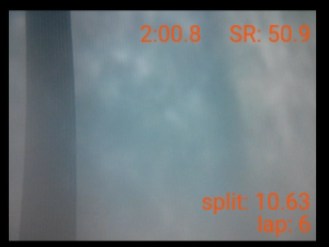
This semester I’ve been lucky enough to be an RA at the MIT Media Lab Fluid Interface group. After finishing the semester I decided to take a few days to build a pair of smart goggles. I was able to create a pair that could tell you the current time, your splits, your stroke rate and the amount of laps you’ve done all in real-time. Furthermore, the total materials I used cost less than 30$ (excluding a smartphone)!

Me wearing the smart goggles
side view of smart goggles

Below is the display that the swimmer sees. I used the accelerator of the phone to detect each stroke to calculate the stroke rate and each push-off to calculate the laps.

view from the smart goggles


What’s next? I would love to tell you but I shouldn’t for reasons explained in my previous post!


Want to learn how to maintain strength, endurance mobility and prevent weight gain during a vacation? Grab a free e-book  where I offer the short bodyweight workouts and nutrition plan that I use that still allows do this without sacrificing your relaxing vacation.

The Scapula Elevated Streamline


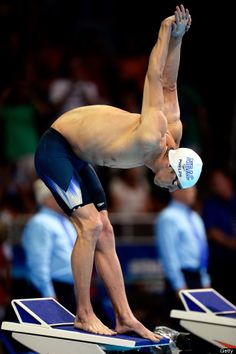
Ten years ago, Kosuke Kitajima was by far the best at the breaststroke pull-outs. At 5’10″ that is a pretty impressive feat. What was it that made him better than everyone else? No, not his illegal dolphin kick. Even after 2005 when FINA legalized the dolphin kicks in the pullouts, he was still ahead of the rest as shown below. This was the 2008 Japanese Olympic Trials. You can see he makes over a half body lead just with the start.


In an interview he mentioned that he would shrug his shoulders during the pull-out. This lessened his drag profile and helped him go farther and faster. He no longer has that edge as all world class breaststrokers shrug their shoulders now.

It seems bizarre that people were doing something seemingly simple in a sub-optimal fashion. This inspired me to look at the regular streamline. Is it done optimally?

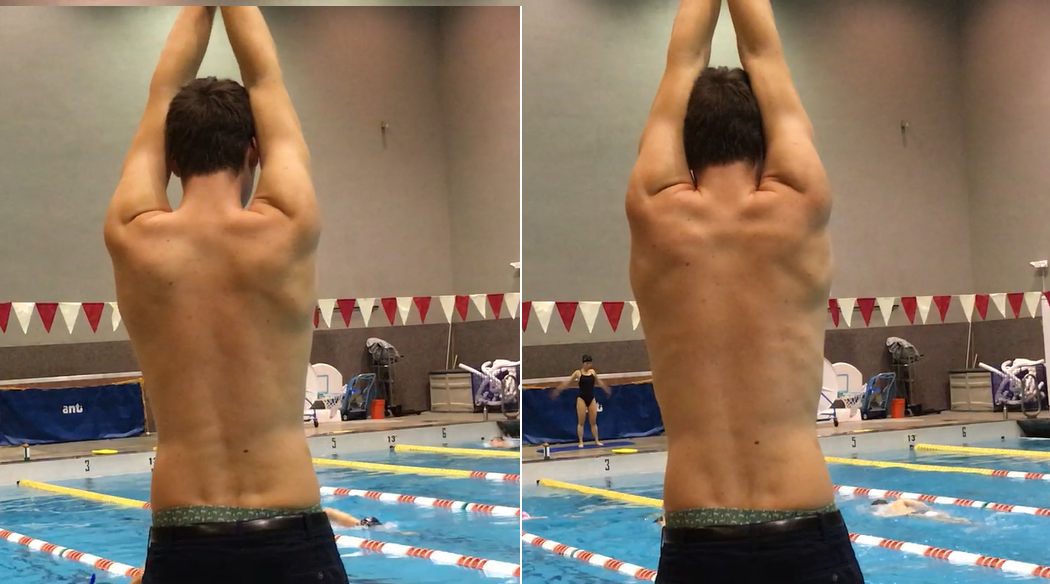
I asked a former teammate to get into the best streamline position he can, later I asked him to shrug his shoulders while in the streamline position. There is a pretty evident difference between the two.

everetts streamline elevated vs depressed


Firstly, he was able to improve his drag profile by making his streamline longer and narrower.

Secondly, he was able to eliminate the space between neck and shoulders which decreases the surface area of skin to water contact, and thereby decreases friction resistance.

I also tried the two streamlines and although the difference is not as obvious my drag profile is improved with the narrowing of my streamline

.my streamline scapula elevated vs depressed

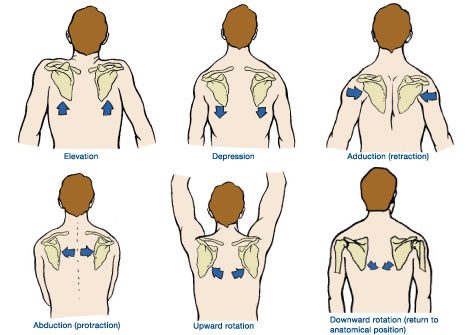
I encourage you to play with this idea as well and for those interested here are the various scapula movements and their names.

All the various scapula movements


Baking Soda (NaHCO3) as a Performance Enhancer

Theory

Lactic Acid is produced in muscle cells. During strenuous exercise the levels of lactic acid increase in the body causing the pH in the body to decrease. This leads to metabolic acidosis, which is what we feel as muscle fatigue.

Baking Soda or sodium bicarbonate is alkaline. It also acts as a buffer. A buffer resists pH change upon the addition of an acidic or basic components.

The idea is to use baking soda to act as a buffer to resist pH change due to lactic acid buildup. If this works, we can reduce metabolic acidosis/fatigue and theoretically increase performance.

Study

There have been plenty of studies done on this topic I will cover three studies done in varying sports.

Cycling:

Experiment: Twenty-three subjects participated in this study, which included eight females and fifteen males, aged at 21.4 ±2.3. Subjects completed six trials, three following the ingestion of sodium bicarbonate (300mg/kg bodyweight) and three following the ingestion of a placebo (8g of sodium chloride or salt). Each trial consisted of ten, ten-second sprints on a cycle ergometer with a fifty-second recovery between each sprint.

Results: The bicarbonate trial produced higher mean average power outputs in all ten of the ten-second sprints, with the difference in average power output being statistically significant in eight of these.

Weightlifting:

Experiment: The participants used 80% of their max weight on the squat . They did three sets of each exercise to failure using this weight, with three minutes of rest in between sets and five minutes in between exercises. In random order and on different days, each person either consumed baking soda or a placebo an hour before lifting.

Results: The average total reps over three sets without baking soda was 24.6, but with baking soda, the average was 31.3.

Swimming:

Experiment: Nine swimmers swam the 200 meter freestyle under three conditions: normal supplement-free conditions; 60 to 90 minutes after taking sodium bicarbonate capsules; and 60 to 90 minutes after taking calcium carbonate capsules, which served as a placebo.

Results: “On average, the swimmers shaved 1.5 seconds off of their performance time”.

bakingsoda

Conclusion: There is no doubt that baking soda is effective. It was been known and used by athletes since the 1930s.

Recommended Dosage: 0.3 grams per kg of body mass or .15 grams per pound. Since it gets absorbed quite quickly take approximately 1 hour before training/competition.

Caution: Side effects of baking soda include “gastrointestinal woes like cramps, nausea and diarrhea”.

PNF Stretching for Swimmers (Part 1)

When I recently became serious about mobility training, I did some research and came across a unique stretching protocol that I later applied and found to be very effective. It is called PNF stretching, or proprioceptive neuromuscular facilitation stretching. It is a set of stretching techniques commonly used in clinical environments to enhance both active and passive range of motion in order to improve motor performance and aid rehabilitation. The technique is as follows:


  1. Stretch until maximum range of motion (ROM) is reached
  2. Contract (20-30% max effort) the stretched muscle for 5-10 seconds
  3. Repeat 1) and 2) 3-6 times until ROM no longer increases


You will notice that after contraction , you will be able to will be able to go into a deeper stretch (when repeating step 1). The idea comes from the fact that when stretching regularly not all the muscle fibers in your muscles are being stretched. By contracting the muscle under tension, you activate more of the muscle fibers to become stretched, thereby increasing your ability to go into a deeper stretch.

Some ­important­ things to know:

  1. Do not do this before swimming or any form of exercise. Static stretching should always be done afterwards.
  2. It is normal to experience muscle soreness the next day.
  3. Do not do this everyday. This form of stretching is very intense and should be treated like weightlifting. I personally get the best results using this protocol once every 3 days.
  4. Yes, it is okay to stretch on the off days (but not in the PNF fashion).
  5. This is a form of static stretching. Be sure to incorporate dynamic stretching in your mobility training as well.
  6. This is a very intense and advanced form of stretching. BE VERY CAREFUL. Take your time, one stupid move and you can seriously injure yourself.

pnf stretching can help to reach the flexibility phelps hasI will post some stretches that can be done for swimmers using this protocol in a few days.