 by
by After college, I started to incorporate weighted dips into my strength training routine. I found it to be an amazing exercise. It works the chest, shoulder, and triceps as well as shoulder flexibility. Furthermore, since it is a closed-chain movement (ie. hands are fixed in space and do not move), it is much safer. I have never injured myself doing this exercise. I can’t say the same for the bench press.
After discovering the benefits of dips, I was a little agitated that they were not part of the weight training program I was on in college. This made me start to question the other exercises that were performed in the college strength training routine. We were performing various isolation exercises such as skull crushers and triceps extensions. Should we really be doing the same isolation work that body-builders do? Furthermore, isolation movements (especially triceps ones) are extremely unnatural. In comparison, think about how often we use closed-chain compound movements.
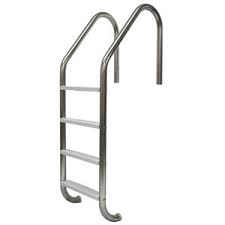
Every time you get in and out of your seat, you are performing a squat, and every time you drop your keys and need to pick it up, you are performing a dead-lift. When you jump out of the pool, you are doing a pull up followed by a dip. Have you ever had to do a movement similar to skull-crushers in everyday life? Most likely not. Unnatural movements, more often than not, can lead to injuries.
I am drifting off topic, so let me get to my main argument. My theory is that pull-ups and dips should be the main focus for swimmers in the strength training. The two exercises work the first and second half of the stroke respectively. Luckily enough, I was able to find a study that was able to test my hypothesis.

Study:
Scientists at Ball State University in the United States divided 10 highly trained male collegiate swimmers into two groups. Members of both groups maintained a daily swimming volume of about 5600 metres, with most of the work consisting of intervals designed to produce an exercise intensity of greater than 85% V02max (over 90 per cent of maximal heart rate).
Strength training was conducted twice a week for six weeks, but the two groups used different resistance-training techniques. One group utilized a weight-assisted dip and pull-up training device. This first group completed three sets of dips and pull-ups per workout, with as many repetitions as it took to reach complete fatigue during each set.
The second group carried out traditional weight-training routines, with lat pull-downs, elbow extensions, elbow flexions, bent-arm flys, quadriceps extensions, and hamstring flexions serving as mainstays of the program. All swimmers performed three sets of each exercise with eight to 12 reps per set, using increasing resistance over time.
In the study, the six weeks of swimming and strength training were followed by six weeks of swimming-only workouts.
Results:
Over the 12-week period, there were no differences between the two groups in lean body mass or per cent body fat. However, the weight-assisted dip and pull-up swimmers fared slightly better, compared to the traditional strength trainers. For one thing, they improved their 22.9 meter front crawl sprint time by .3 seconds, from 11.2 to 10.9 seconds, while the traditional people failed to improve.
Their conclusion:
“Weight-assisted dips and pull-ups may be more like typical swimming motions, compared to routine strength-training routines, and therefore might be better at improving actual swim-stroke power.”
My Conclusion:
The results of this study seem to be in line with my theory that pull-ups and dips should be the main focus in the weight room for swimmers. However this is just one study and it is important to keep an open-mind.
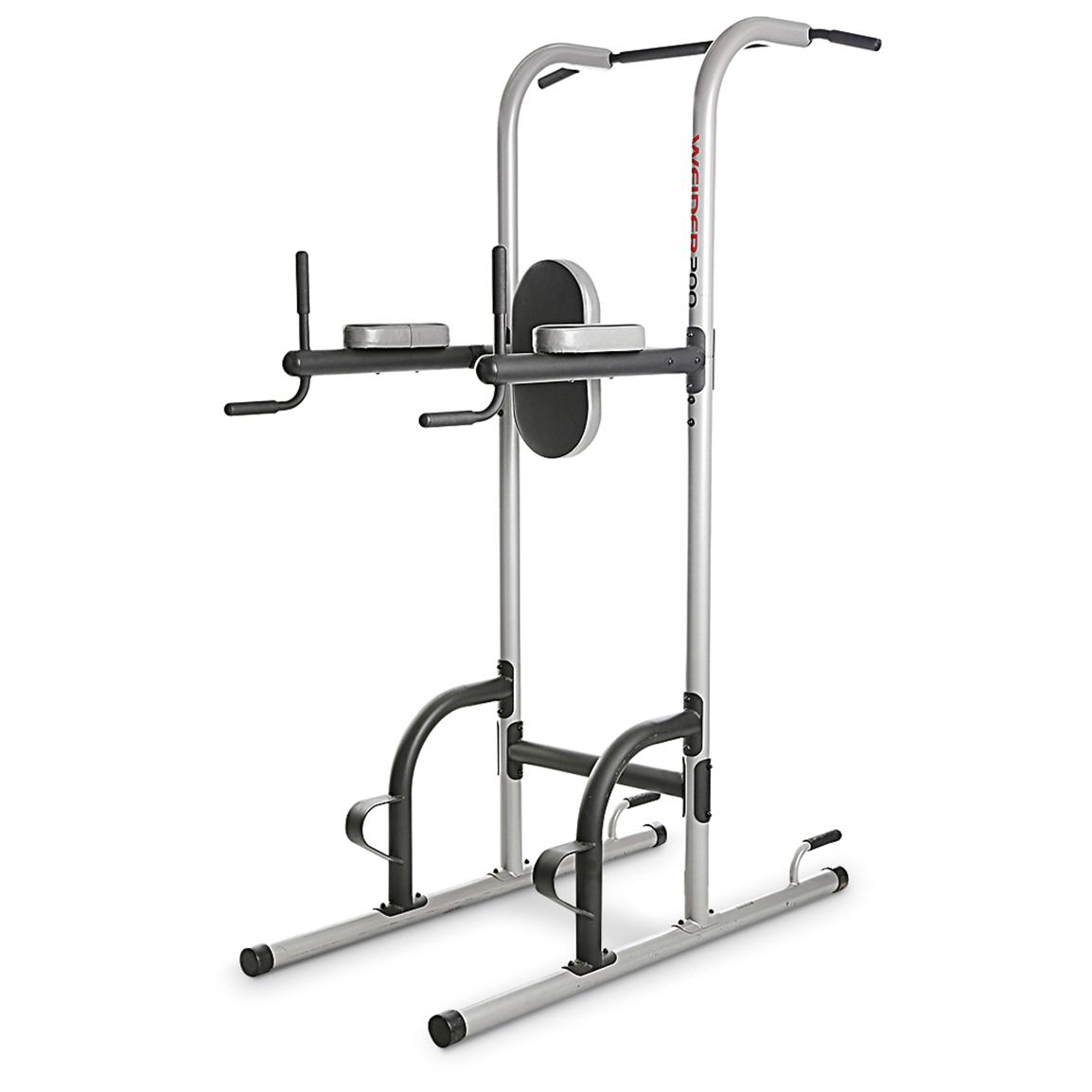
The great thing about pull-ups and dips are that they do not require expensive equipment. You can purchase a power tower (shown below) for just under $100, and have it on the pool deck. You can also buy an over-the-door pull-up bar for $20 and buy a pair of gymnastic rings for an additional $20 to perform dips. Dips can also be performed on the pool ladder.