It is pretty common to see swimmers train with drag suits on. The idea is that training in a performance-dehancing condition creates a more potent training stimulus since your body must overcompensate to adapt to the hard conditions.
The question then is, if training with an empty stomach (ie. a performance-dehancing condition with limited muscle glycogen) could lead to superior training results.
I found one study that seem to have some interesting results.
The study’s aim was to see if fasted state endurance training would yield greater improvements in fuel utilization and boost muscle glycogen storage efficiency. The secondary aim was to see if the effects differed between genders, since men and women favor slightly different fuels during exercise. Men tend to utilize more glucose, while women tend to burn more fat.
The experiment
This study lasted four weeks and had all subjects cycling 25 minutes at 65% VO2Max five mornings the first week. The duration was then increased by 25 minutes per week, so that subjects were cycling 100 minutes in the final week.
The cycling was either done in the fasted state or one hour after a cereal-based breakfast (1.5 g carbs/kg). In weeks three and four the fed group also received 30 g of maltodextrin during training. The fasted group received the breakfast, and the maltodextrin, after training.
Week 1, fasted: 25 min cycling followed by breakfast.
Week 1, fed: breakfast followed by 25 min cycling.
Week 2, fasted: 50 min cycling followed by breakfast.
Week 2, fed: breakfast followed by 50 min cycling.
Week 3, fasted: 75 min cycling followed by breakfast.
Week 3, fed: breakfast followed by 75 min cycling.
Week 4, fasted: 100 min cycling followed by breakfast and maltodextrin.
Week 4, fed: breakfast followed by 100 min cycling and maltodextrin.
With regards to the diet maintained outside the laboratory, weighed food records were collected to ensure that potential differences could not be explained by differences in diet. This was done pre-training and in the final week. The findings showed that calorie intake increased in both groups, with an increase coming mainly from carbs and protein. But no difference in total calorie intake or macronutrient intake existed between groups
Results
VO2 max: Remember VO2 max is a measure of the maximum volume of oxygen that an athlete can use
Fasted: +9.7% increase
Fed: +2.5% increase
The fasted group increased their VO2Max significantly more than the fed group.
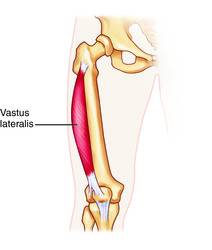
Muscle glycogen content: shows how much glucose is stored in the muscle. The sample was taken from vastus lateralis, a portion of the quads, since this was the main muscle exercised during the cycling sessions.
Fasted: +54.7% increase
Fed: +2.9% increase
Summary:
Straight from the paper…
“The main findings of the present study were that: training in an overnight-fasted state enhances storage of muscle glycogen compared to training in the fed state; skeletal muscle of men and women respond differently in terms of oxidative activity to training in the fed and overnight-fasted state; and peak VO2 and peak power improved more when training in the fasted state compared to the fed state.”
My thoughts:
There seem to be some clear benefits of doing a workout in a fasted state. However I encourage you to do your own research and try training fasted a few time to see how it works for you. It will most likely be very hard the first few times, but your body should adjust over time. If you do decide to train fasted, I highly recommend taking 10 grams of BCAAs prior to the workout to prevent muscle catabolism.
 by
by